Tridopedia

    A C I M T
  • Appendix N

    Trid is an amalgam of many disparate inspirations, including: Fiction Cornwell, Bernard: The Saxon Stories Hardy, Lyndon: Master of the Five Magics Howard, Robert E.: The Coming of Conan the Cimmerian; The Bloody Crown of Conan; The Conquering Sword of Conan Lewis, C.S.: Chronicles of Narnia Moorcock, Michael: The Elric Saga Tolkien, J. R. R.:…

  • Author’s Notes

    The World of Trid began in 1989 as a setting for my B/X D&D game, mapped on a single piece of 4’x3′ butcher paper tacked the wall of my high school bedroom. The map has changed over the last three-and-a-half decades, but one constant has been its thematic adherence to the B/X implied setting. That…

  • Climate

    Trid’s distance from Ammonkis allows for five distinct climate bands, while its axial tilt provides seasonal variation by latitude. Most societies are agrarian, and the climatic impact on what can be grown and how quickly is the primary factor in population migrations and density. Five climate bands, each 18 degrees north-to-south, characterise the environmental conditions…

  • Introduction to Trid

    Trid is an old world, scarred, healed, and scarred again through the rise and fall of empires. First were the Builders of the Before Times, whose disappearance allowed the reptile Ophidians to dominate the Dim Ages that followed. The elves, allied with men, toppled the Ophidian Empire to usher in the Age of Fable, defined…

  • Mapping Conventions

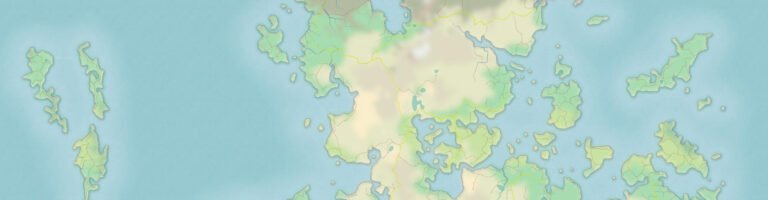
    Maps of Trid weren’t important until the Age of Fable, when the elves began to assess the size, shape, and populations of the Continent. As the Ardic Republic grew, the elves developed a full view of the land and sea—by direct exploration where possible or by divination where not. Maps of Trid are laid out…

  • Terrain

    Terrain Distribution & Population Trid has a global land area of 34.2 million square miles, with a total population of 33.9 million, for a rough global population density of one person per square mile. However, not all land is equally habitable, and the table below shows the population by terrain type. Terrain Area (sq. miles)…